ROOF ASSEMBLY
Under the roof, other equally important elements prevent further condensation, protect the building from thermal and acoustic problems, and offer significant power savings.
How does micro-ventilated roof system work?
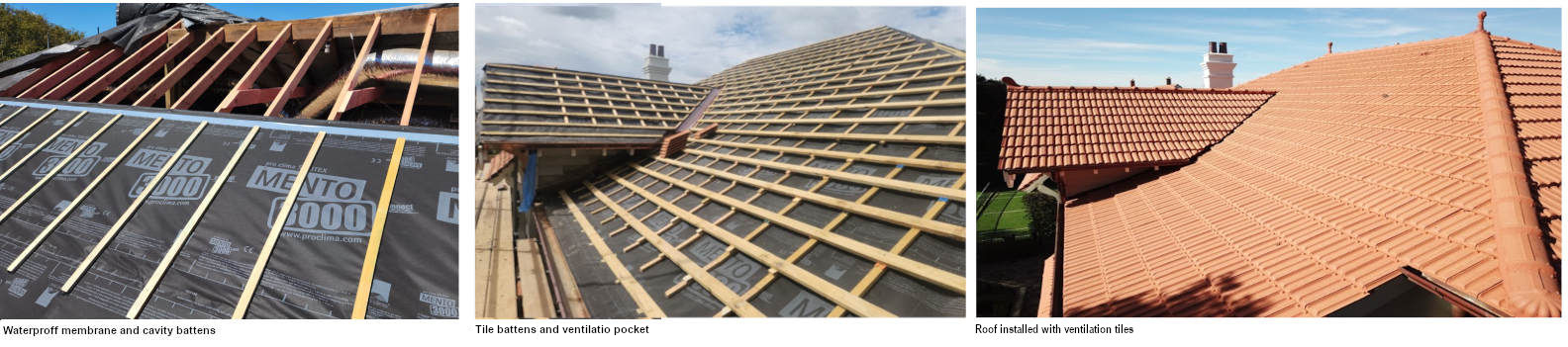
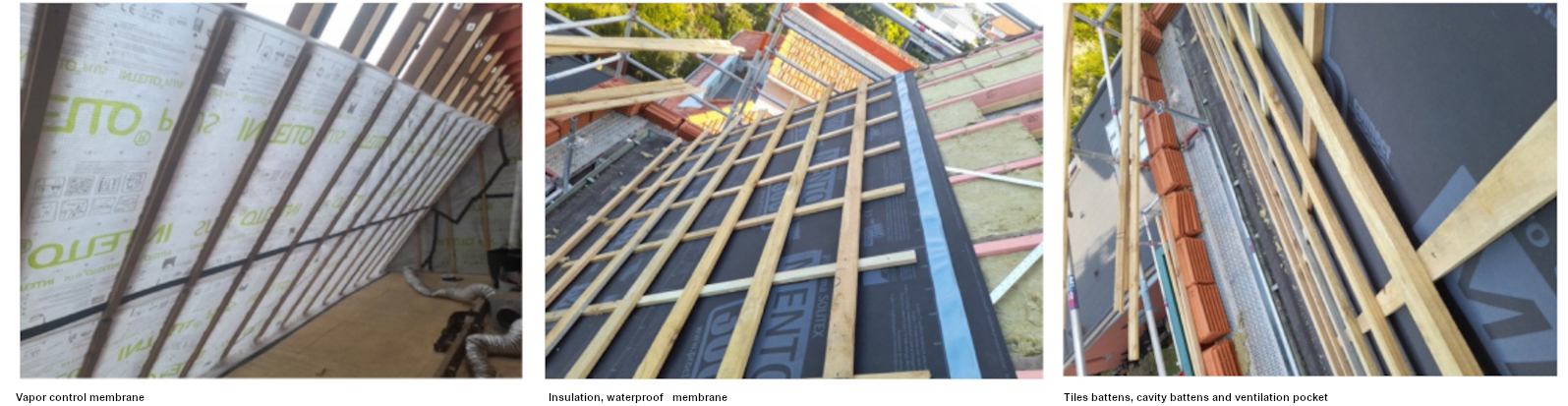
Micro ventilation involves extra vertical battens being installed on top of the rafters to create a ventilation cavity. Ventilation is provided through the air pocket between the tiles and the waterproof membrane so that external air can enter the attic area through the eaves and exit by way of specific ventilation tiles or ventilated ridge.
The air pocket creates better thermal insulation of the roof because the layer of continuously moving air has an insulating effect. It also allows for the elimination of aqueous vapor from the interior and any condensation that forms under the tiles, which keeps the roof dry and increases its durability. During summer, ventilation enables the hot air that builds up under the roof to be evacuated, which keeps the house cooler.
How does a cold ventilated roof system work?
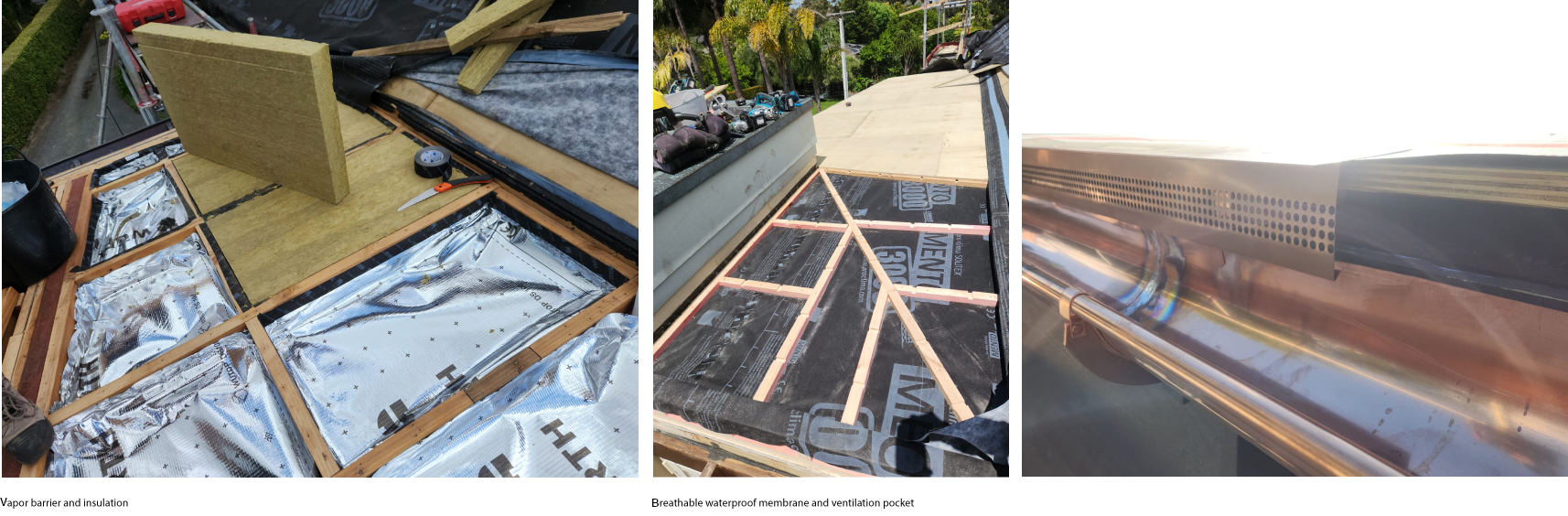
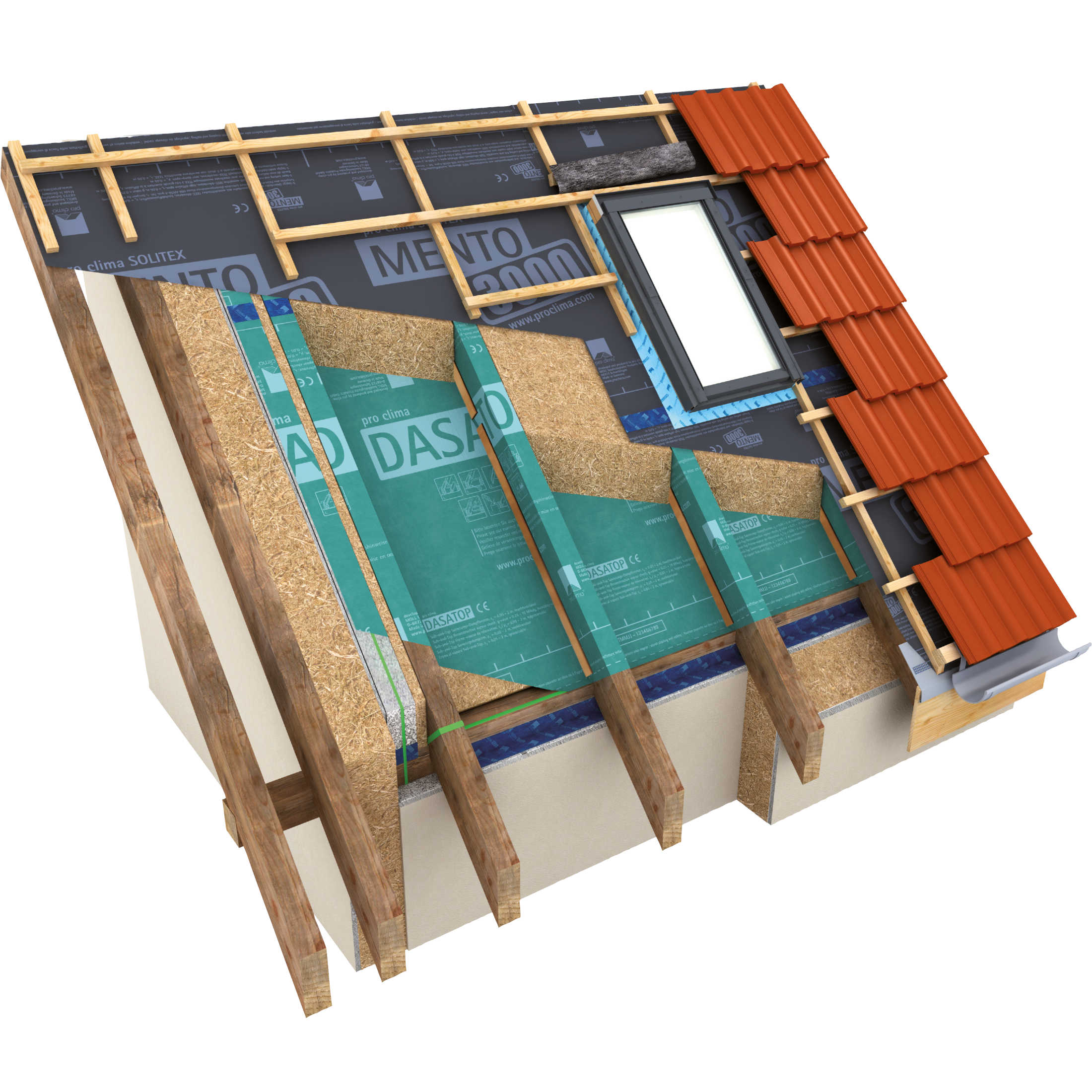
The vapor control membrane serves to control the passage of moisture and prevent condensation in the interior layers of the roofing structure. In winter, warm air inside the building creates a degree of moisture saturation superior to that of the cold air outside. Therefore, as the internal air cools, the moisture creates condensation, which causes damage to the structure and creates the ideal conditions for mould to grow.
Given the difference in the interior and exterior temperatures, condensation is inevitable. Therefore, it is necessary to try and limit the quantity of water that can form in the structure with a vapor control membrane so that as the warm internal air cools, it contains the same amount of moisture as the cool exterior air. The vapor control layer must be laid in the “hot” part of the roof, between the ceiling/sarking and the insulation. It is better to install a vapor control membrane, which limits the amount of moisture, than a vapor barrier membrane, which blocks moisture entirely, because we need to ensure that vapor can also move in the opposite direction (i.e. breathe in summer).
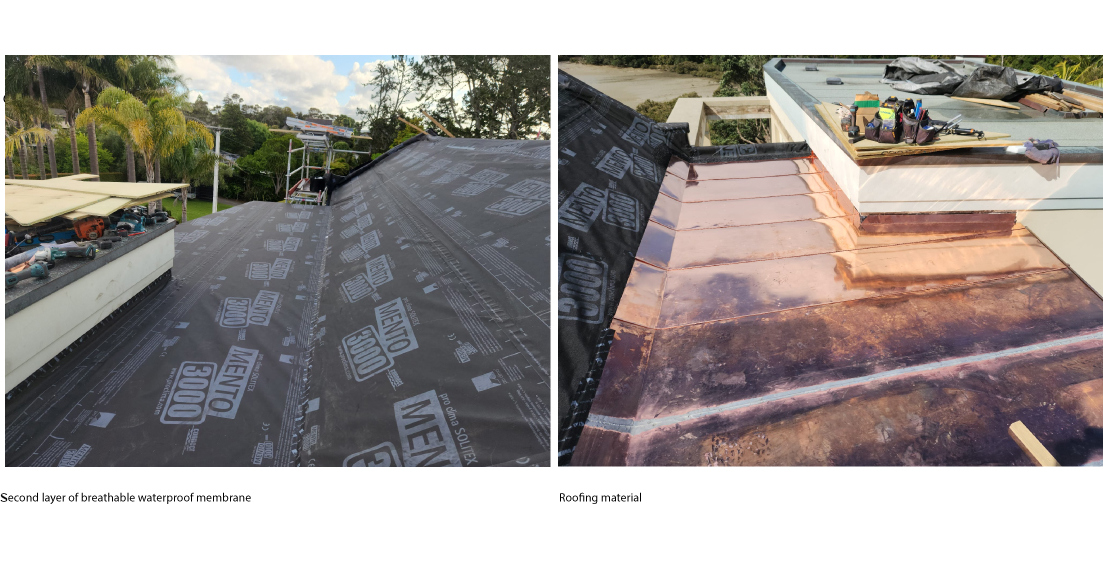
In the “cold” (upper) part of the insulation, a breathable waterproof membrane should also be installed to keep out water and wind and allow the internal moisture to exit.
During the summer, poor ventilation causes greater transmission of warm air, which is not dispersed into the insulation. The temperature of the water vapor contained in the air, which will migrate through the thermal insulation package to lower temperature sources, will decrease until it reaches a temperature that will condense it (dew point). The breathable waterproofing membrane, allowing water vapour to pass through it, will allow the ventilation to dry this condensation.
Surface condensation causes an increase in the thermal conductivity of materials and the development of conditions favourable to the proliferation of biological organisms, such as mould and fungi, which undermine the integrity of the materials, especially wood.
If the dew point is reached inside the insulating layers, interstitial condensation is generated, which can lower their performance. For this reason the passage of air is essential. The ventilated roof guarantees optimal ventilation that eliminates humidity and reduces the risk of the condensation turning into dangerous ice barriers.
How does a cold ventilated flat roof system work?
Flat roof ventilation voids are often less effective and less continuous than in steep roofs, so the structure dries more slowly. At the same time, external covering made with soldered copper trays or other membranes, is vapour‑tight, meaning there is very little outward drying. If moisture gets into the roof, it can remain trapped and lead to persistent condensation and damage.